5 Popular Spices for Better Sleep and Wellness: Benefits, Uses, and What Science Says
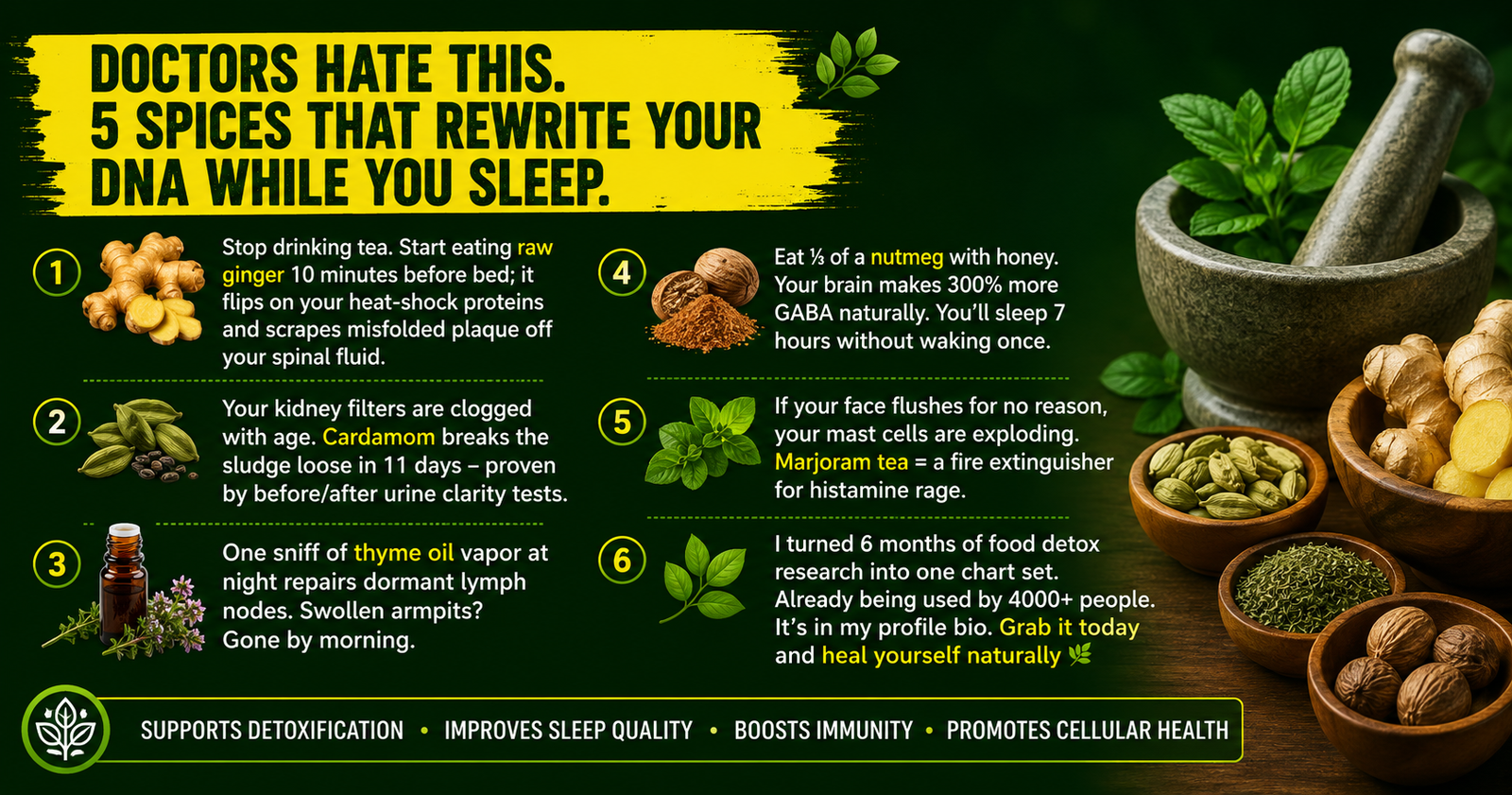
Spices have been used for centuries in traditional wellness practices around the world. Many people add herbs and spices to their daily routine to support digestion, relaxation, and overall health. While some social media posts make dramatic claims about "rewriting DNA" or instantly curing health problems, the reality is more balanced. These spices may offer beneficial compounds that support wellness when combined with a healthy lifestyle.
In this article, we'll explore five popular spices—ginger, cardamom, thyme, nutmeg, and marjoram—and what research suggests about their potential health benefits.
1. Ginger: A Traditional Digestive Support
Ginger is one of the most widely used medicinal spices worldwide. It contains bioactive compounds such as gingerol and shogaol, which have antioxidant and anti-inflammatory properties.
Potential Benefits of Ginger
✔ Supports healthy digestion
✔ May help reduce occasional nausea
✔ Contains natural antioxidants
✔ Can support overall wellness
How to Use Ginger
Add fresh ginger to tea
Mix into smoothies
Use in soups and stir-fries
Consume small amounts before meals
While ginger is widely recognized for digestive support, there is no strong evidence that it "scrapes plaque from spinal fluid" or dramatically changes body functions overnight.
2. Cardamom: The Aromatic Wellness Spice
Cardamom is a fragrant spice commonly used in South Asian and Middle Eastern cuisine. It contains antioxidants and plant compounds that may contribute to overall health.
Potential Benefits of Cardamom
✔ Rich in antioxidants
✔ Supports digestive comfort
✔ May help maintain healthy blood pressure levels when combined with a healthy lifestyle
✔ Freshens breath naturally
Ways to Enjoy Cardamom
Add to tea or coffee
Use in baked goods
Mix into rice dishes
Blend into smoothies
Although cardamom is a healthy spice, claims about clearing kidney "sludge" within specific timeframes are not scientifically established.
3. Thyme: A Herb Rich in Natural Compounds
Thyme has long been used in cooking and traditional herbal practices. It contains thymol, a compound known for its antioxidant properties.
Potential Benefits of Thyme
✔ Contains antioxidants
✔ Supports respiratory wellness
✔ Traditionally used in herbal remedies
✔ Adds flavor without extra calories
Common Uses
Thyme tea
Seasoning for meat and vegetables
Aromatherapy products
Herbal infusions
The pleasant aroma of thyme may promote relaxation, but claims that it repairs lymph nodes overnight are not supported by scientific evidence.
4. Nutmeg: A Traditional Spice for Relaxation
Nutmeg has been used in traditional wellness practices for generations. It contains compounds that may contribute to relaxation when consumed in small culinary amounts.
Potential Benefits of Nutmeg
✔ Traditionally associated with relaxation
✔ Adds flavor to foods and beverages
✔ Contains antioxidant compounds
✔ Commonly used in warm drinks before bedtime
How to Use Nutmeg
Sprinkle on oatmeal
Add to warm milk
Use in baking
Mix into smoothies
Nutmeg should always be consumed in moderation. Large amounts may be harmful and are not recommended.
5. Marjoram: A Gentle Herbal Favorite
Marjoram is a fragrant herb from the mint family. It has been traditionally used to support relaxation and digestive comfort.
Potential Benefits of Marjoram
✔ Traditionally used for relaxation
✔ Supports digestive wellness
✔ Contains antioxidant compounds
✔ Popular in herbal teas
Popular Uses
Herbal tea
Seasoning for soups
Salad dressings
Mediterranean dishes
While marjoram tea may be soothing, claims that it instantly eliminates histamine-related issues are not supported by strong clinical evidence.
The Bottom Line
Ginger, cardamom, thyme, nutmeg, and marjoram are nutritious spices that can be part of a healthy lifestyle. They contain natural plant compounds, antioxidants, and traditional wellness benefits that many people appreciate.
However, it's important to approach sensational health claims with caution. No spice can instantly cure diseases, rewrite DNA, repair organs overnight, or replace professional medical care. The best approach is to enjoy these spices as part of a balanced diet, regular exercise routine, quality sleep, and overall healthy lifestyle.
This article is for informational purposes only and does not constitute medical advice. Consult a qualified healthcare professional before making significant changes to your diet or health routine.
Health Tips
5 Popular Spices for Better Sleep and Wellness: Benefits, Uses, and What Science Says
Shihab
3 months ago
43 views
0 replies
Replies (0)
No replies yet. Be the first to reply!
Post a Reply
Log in to join the conversation and post a reply.