Protein is one of the most important nutrients your body needs every day. It plays a key role in building muscles, repairing tissues, supporting immunity, and keeping you full for longer. Whether your goal is muscle gain, weight management, or a healthier lifestyle, adding enough protein to your diet can make a big difference.
Why Is Protein Important?
Protein is made up of amino acids that help your body repair and grow. A protein-rich diet can help:
Support muscle growth and recovery
Maintain strength and energy levels
Improve fullness and reduce unnecessary cravings
Support overall health and fitness goals
Top High-Protein Foods
1. Eggs
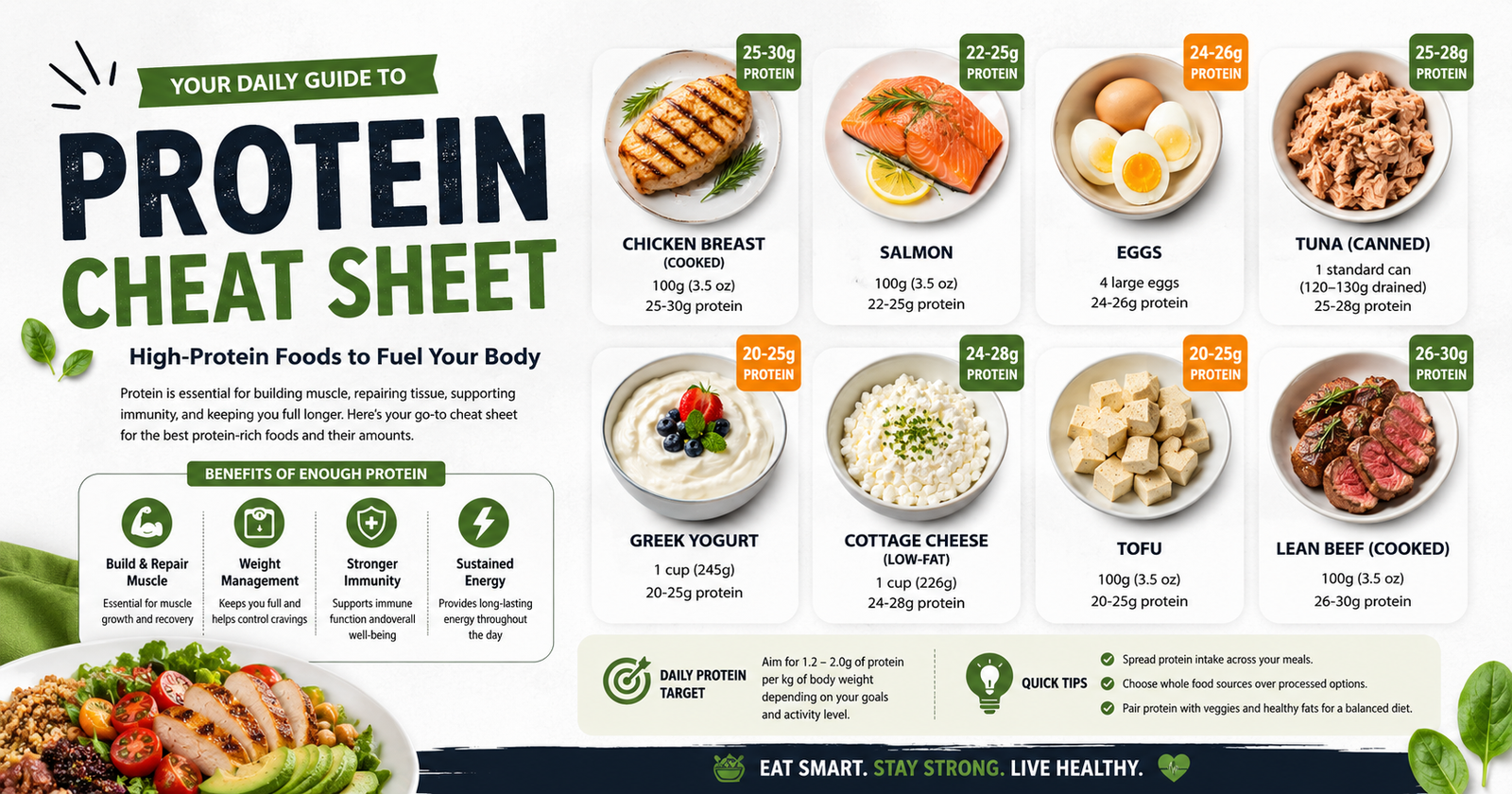
Eggs are an affordable and complete protein source. Four large eggs provide around 24–26g of protein and contain essential nutrients that support daily health.
2. Chicken Breast
Cooked chicken breast is a popular choice among fitness enthusiasts. Around 85–100g can provide approximately 25–30g of protein with low fat content.
3. Salmon
Salmon provides high-quality protein along with healthy omega-3 fats. A 100g serving contains about 25g of protein.
4. Tuna
Tuna is a convenient protein option. One standard can (120–130g drained) can provide around 25–28g of protein.
5. Greek Yogurt
Greek yogurt is a great option for breakfast or snacks. A 300g serving can provide about 25g of protein while supporting digestive health.
6. Cottage Cheese
Low-fat cottage cheese is rich in protein and works well as a healthy snack. It can provide around 24–28g of protein per serving.
7. Lean Beef
Lean beef is packed with protein and important minerals. A 100g serving provides around 26–28g of protein.
8. Tofu
Tofu is a plant-based protein source that is suitable for many diets. Around 300g can provide approximately 24–26g of protein.
9. Whey Protein Powder
Whey protein is a convenient supplement for people who struggle to reach their daily protein target. One scoop (30g) usually provides around 24–27g of protein.
How Much Protein Do You Need?
Protein needs depend on your body weight, activity level, and fitness goals. Many active people aim for around 1.2–2.0 grams of protein per kilogram of body weight daily.
Final Thoughts
A balanced protein-rich diet does not mean eating only one type of food. Combining different protein sources with vegetables, healthy fats, and whole foods can help you stay strong, recover faster, and maintain a healthier lifestyle.
Choose quality protein, stay consistent, and make smart nutrition choices every day.
Health Tips
Protein Cheat Sheet: The Best High-Protein Foods
Shihab
3 months ago
35 views
0 replies
Replies (0)
No replies yet. Be the first to reply!
Post a Reply
Log in to join the conversation and post a reply.