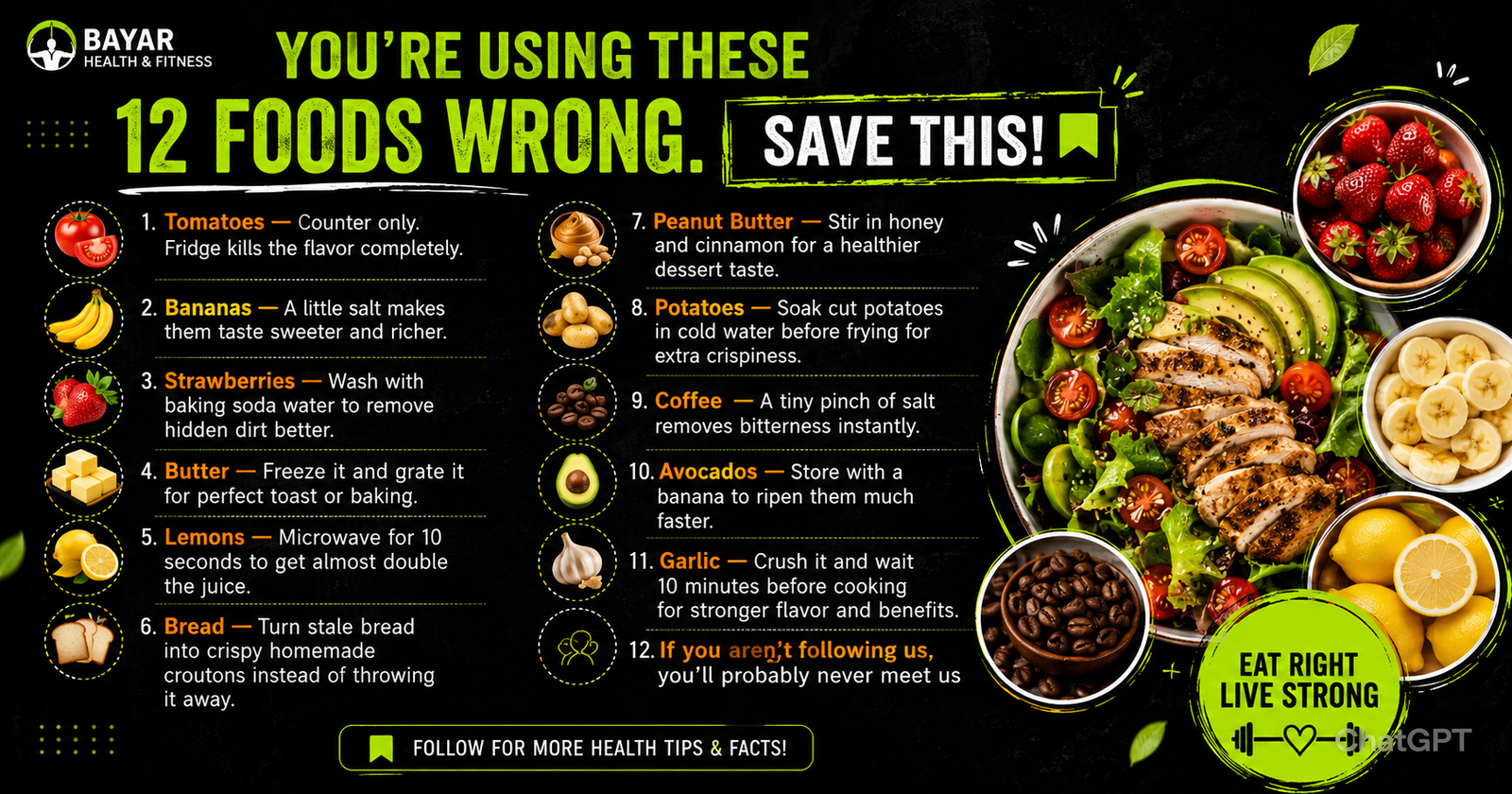
12 Simple Food Hacks That Can Improve Flavor, Freshness, and Reduce Waste
Have you ever wondered why your tomatoes don't taste as sweet as they should, or why your homemade fries never become as crispy as restaurant fries? The truth is, it's often not the food itself—it's how we store, prepare, or use it.
Small changes in the kitchen can make a noticeable difference. Proper food storage helps preserve nutrients, while smart preparation techniques can improve flavor, texture, and even reduce food waste. These simple food hacks are easy to follow and can make your everyday meals more enjoyable.
Let's explore 12 common foods that many people unknowingly use the wrong way—and discover smarter ways to handle them.
1. Tomatoes: Keep Them on the Counter
One of the biggest mistakes people make is storing tomatoes in the refrigerator. Cold temperatures slow the ripening process and can damage the fruit's texture, making it soft, watery, and less flavorful.
Instead, keep ripe tomatoes on your kitchen counter away from direct sunlight. Refrigerate them only if they're becoming overripe and you need to extend their shelf life for a day or two.
Pro Tip: Store tomatoes stem-side down to help keep them fresh longer.
2. Bananas: Make Them Taste Even Sweeter
Bananas are naturally sweet, but many people don't know that a tiny pinch of salt can enhance their sweetness by balancing the flavors.
You can also pair bananas with peanut butter, cinnamon, or yogurt for a nutritious snack packed with potassium, fiber, and natural energy.
Bonus Tip: Wrap the banana stems with plastic wrap to slow down ripening.
3. Strawberries: Wash Them the Right Way
Strawberries often carry dirt and tiny particles hidden in their surface. Washing them quickly under tap water may not remove everything.
Instead, soak them in water mixed with a small amount of baking soda for a few minutes, then rinse thoroughly with clean water and dry completely before storing.
Avoid washing strawberries until you're ready to eat them, as excess moisture can cause them to spoil faster.
4. Butter: Freeze Before Grating
Need butter for baking? Instead of struggling with a cold butter stick, freeze it first and grate it using a cheese grater.
Grated butter mixes more evenly into flour, making pie crusts, biscuits, and pastries lighter and flakier.
This simple trick also makes spreading butter easier when it's very cold.
5. Lemons: Get More Juice
If your lemons seem dry, microwave them for about 10 seconds before cutting.
The gentle heat softens the inside and helps release more juice when squeezed.
Rolling the lemon firmly on the countertop before cutting can also increase juice yield.
6. Bread: Don't Throw Away Stale Bread
Stale bread doesn't have to end up in the trash.
Cut it into cubes, drizzle with olive oil, season with garlic powder and herbs, then bake until crispy.
Homemade croutons are perfect for soups and salads.
You can also blend stale bread into breadcrumbs for coating chicken, fish, or vegetables.
Reducing food waste saves both money and resources.
7. Peanut Butter: Upgrade Your Snack
Peanut butter is already delicious, but mixing it with a little honey and cinnamon creates an even more satisfying spread.
This combination works well on toast, apples, bananas, oatmeal, or smoothies.
Choose natural peanut butter without added sugar whenever possible.
8. Potatoes: Soak Before Frying
Restaurant-style crispy fries start with one important step: soaking.
After cutting potatoes, soak them in cold water for at least 30 minutes.
This removes excess starch, allowing the fries to become crispier during cooking.
Dry the potatoes thoroughly before frying or baking to achieve the best texture.
9. Coffee: Reduce Bitterness Naturally
If your coffee tastes overly bitter, try adding a tiny pinch of salt.
Salt can help balance bitterness without making the coffee taste salty.
Using freshly ground beans and the correct water temperature (around 195–205°F or 90–96°C) can also greatly improve flavor.
10. Avocados: Ripen Faster
Waiting days for an avocado to ripen can be frustrating.
Store it next to a ripe banana or apple inside a paper bag.
These fruits release ethylene gas, a natural plant hormone that speeds up ripening.
Once ripe, place the avocado in the refrigerator to slow further ripening.
11. Garlic: Wait Before Cooking
Crush or chop garlic and let it rest for about 10 minutes before cooking.
This allows the enzyme reaction that produces allicin, one of garlic's most beneficial natural compounds.
Adding garlic toward the end of cooking also helps preserve more flavor.
12. Small Kitchen Habits Make a Big Difference
Healthy eating isn't only about choosing nutritious foods.
It's also about preparing, storing, and using those foods correctly.
Simple habits like proper storage, reducing waste, and using smarter cooking techniques can improve both flavor and convenience.
These small changes require almost no extra effort but can transform your everyday cooking experience.
Healthy eating begins in the kitchen. By making a few small adjustments to how you store and prepare common foods, you can improve their taste, reduce waste, and get more enjoyment from every meal.
Remember that some of these tips are based on practical kitchen experience and may not work exactly the same in every situation. Feel free to experiment and find what works best for you.
If you found these tips helpful, save this guide and share it with friends and family. Sometimes the smallest kitchen hacks make the biggest difference.
Health Tips
12 Simple Food Hacks That Can Improve Flavor, Freshness, and Reduce Waste
Shihab
3 months ago
35 views
0 replies
Replies (0)
No replies yet. Be the first to reply!
Post a Reply
Log in to join the conversation and post a reply.