How to Make Indian Butter at Home: A Traditional Method
Indian butter, commonly known as white butter or makhan, has been a part of Indian kitchens for centuries. It is fresh, creamy, and completely natural. Unlike commercial butter, Indian homemade butter is usually prepared from curd (yogurt) rather than cream, which gives it a unique flavor and texture. In many rural households, butter is still made using traditional methods passed down through generations.
Making butter at home is simple and requires only a few ingredients and some patience. In this blog, we will explore the method, ingredients, and benefits of making Indian butter at home.
Description
Indian butter is soft, mildly tangy, and rich in flavor. It is traditionally made by churning fermented curd or cream until the fat separates from the buttermilk. The resulting butter is then washed in cold water to remove excess buttermilk.
This butter is widely used in Indian cooking. It can be spread on parathas, rotis, and bread, or used in dishes like dal makhani, butter chicken, and paneer butter masala. Fresh homemade butter is also considered healthier because it contains no preservatives or artificial additives.
In Indian culture, butter also holds religious and historical significance. In many stories, Lord Krishna is known as Makhan Chor (the butter thief), symbolizing the importance of butter in traditional households.
Ingredients
To make Indian butter at home, you need only a few basic ingredients:
- Fresh Curd (Yogurt) – 1 kg
- Cold Water – 1 cup
- Ice Cubes – 3–4 pieces (optional)
- Salt – ½ teaspoon (optional, for salted butter)
Traditional Method to Make Indian Butter
Step 1: Collect the Cream or Curd
In many Indian homes, people collect the cream layer (malai) that forms on top of boiled milk every day. This cream is stored in the refrigerator for several days. Once enough cream is collected, it is used to make butter.
Another traditional method is to use thick curd (yogurt). The curd is slightly fermented, which helps in the butter separation process.
Step 2: Add the Curd or Cream to a Churning Pot
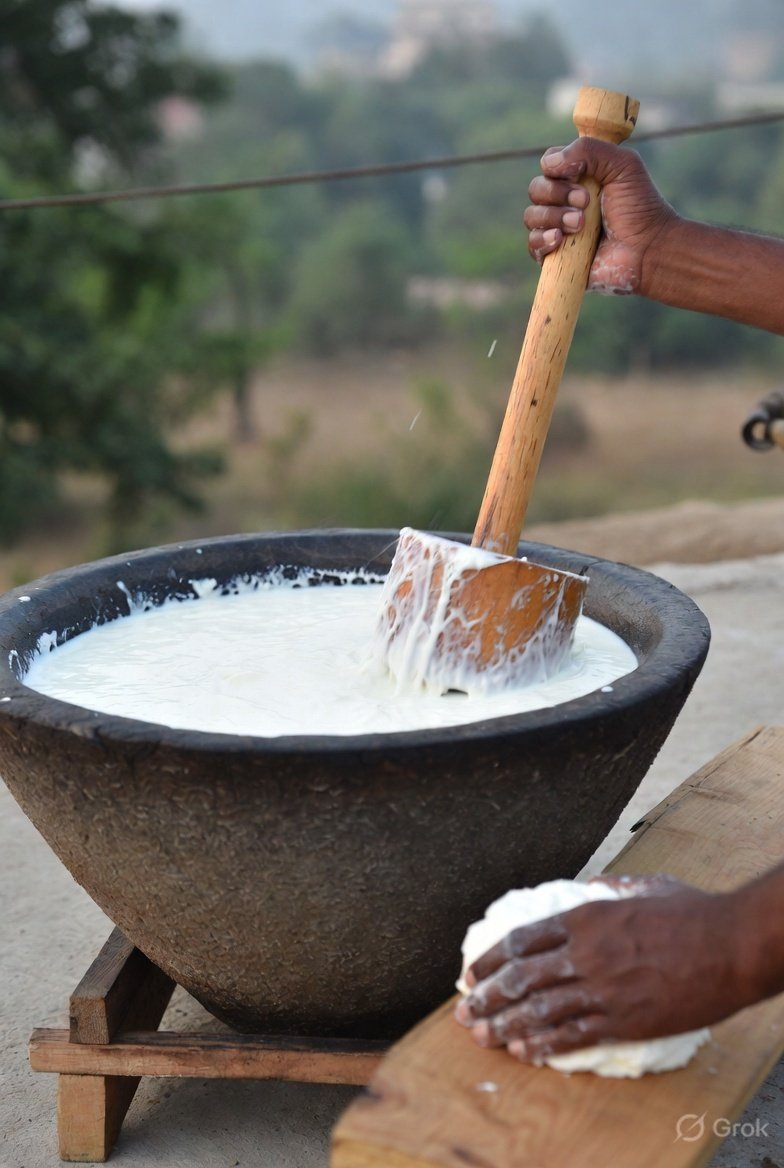
Place the collected cream or curd into a deep bowl or traditional clay pot. In villages, people use a wooden churner called “mathani” for this process. However, you can also use a hand blender or mixer grinder at home.
Step 3: Start Churning
Begin churning the curd or cream slowly. If you are using a mixer, run it at low speed for about 5–10 minutes.
As you churn, the fat molecules start sticking together and gradually form small lumps of butter.
Step 4: Add Cold Water
After a few minutes of churning, add cold water or ice cubes. This helps the butter solidify and separate from the liquid (buttermilk).
Continue churning until you see butter floating on the surface.
Step 5: Separate the Butter
Once the butter has formed, collect it using your hands or a spoon. The remaining liquid is buttermilk, which is also very healthy and refreshing.
Buttermilk can be consumed with salt, roasted cumin powder, and coriander for a tasty drink.
Step 6: Wash the Butter
Place the butter in a bowl of cold water and gently knead it. This step removes any remaining buttermilk and helps increase the shelf life of the butter.
Repeat this process 2–3 times until the water becomes clear.
Step 7: Add Salt (Optional)
If you prefer salted butter, add a small amount of salt and mix well.
Your fresh homemade Indian butter is now ready to use.
Tips for Perfect Homemade Butter
✔ Use full-fat milk or thick curd for better results.
✔ Always churn using cold water for faster butter formation.
✔ Store butter in the refrigerator to keep it fresh longer.
✔ Use a glass or steel container for storage.
Health Benefits of Indian Butter
Homemade Indian butter is not only delicious but also nutritious.
1. Rich in Healthy Fats
Butter contains natural fats that provide energy and help in absorbing vitamins.
2. Good Source of Vitamins
It contains Vitamin A, D, E, and K, which are important for overall health.
3. Supports Digestion
Traditional butter and buttermilk help maintain healthy digestion.
4. No Chemicals or Preservatives
Unlike packaged butter, homemade butter is completely natural.
Uses of Indian Butter in Cooking
Indian butter can be used in many ways:
- Spread on parathas and rotis
- Add to dal and curries
- Use in baking
- Melt over rice or vegetables
- Prepare ghee by heating butter
Many households convert this butter into clarified butter (ghee), which has a longer shelf life and a rich aroma.
Conclusion
Making Indian butter at home is a simple and rewarding process. With just curd or cream and a little churning, you can create fresh, natural butter that tastes far better than store-bought varieties.
Homemade butter not only enhances the flavor of your food but also connects you with traditional cooking methods that have been practiced in India for generations. If you enjoy cooking healthy and natural foods, making butter at home is definitely worth trying.
So next time you have extra cream or curd at home, try this traditional Indian butter recipe and enjoy the rich taste of fresh makhan.
Related Blogs
Indian Milkshakes: Why They’re Famous Worldwide & King of Summer Drinks
Why Indian Milkshake Drinks Are Famous Worldwide & Why They’re Called the King of Summer
Milkshakes have always been a favo
2026-04-17 SEE MORE
Why Non-Vegetarian Samosas Are Famous Around the World
Samosas are one of the most loved snacks across the globe, especially in South Asia. While vegetarian samosas like potato-filled ones are
2026-03-24 SEE MORE
The Side of Yoga That No One Shows You: Real Health, Fitness & Weight Loss Tips
When people think of yoga, they often imagine calm music, flexible bodies, and peaceful poses on a beach. But there’s a side of yoga th
2026-04-29 SEE MORE
11 Ancient Fermented Drinks With Surprising Health Benefits — The #1 Choice May Shock You
In today's world of probiotics, gut-health supplements, and wellness trends, many people are discovering that some of the healthiest drin
2026-06-11 SEE MORE