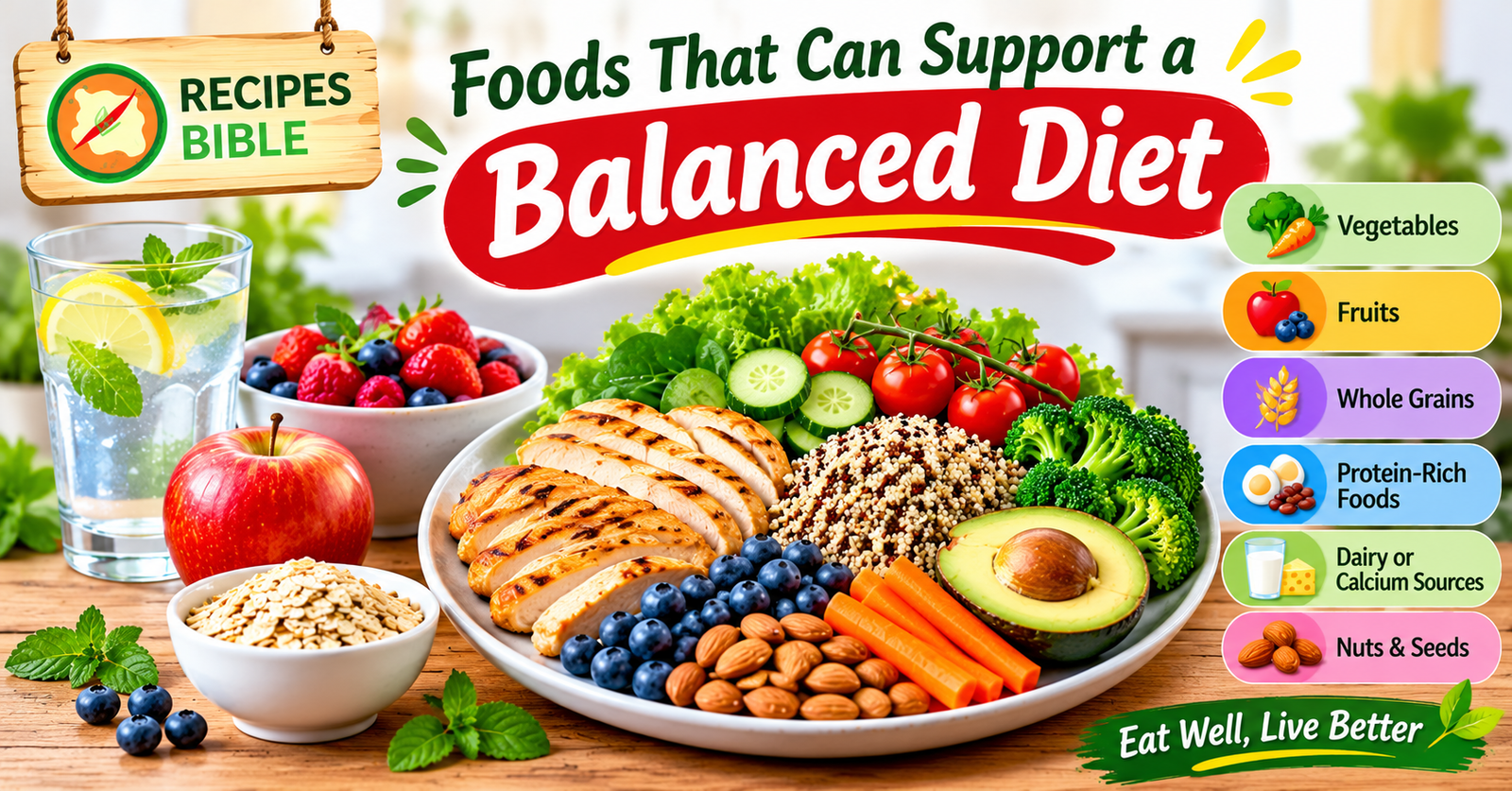
10 Foods That Can Help Support a Balanced Diet
Eating a balanced diet is one of the simplest ways to support overall health and well-being. The foods you choose every day provide energy and essential nutrients that help your body function properly. A balanced eating pattern includes a variety of vegetables, fruits, whole grains, protein-rich foods, healthy fats, and other nutrient-dense ingredients.
You do not need expensive products or complicated meal plans to eat well. Everyday foods can provide many of the nutrients your body needs. The key is to enjoy variety, choose appropriate portions, and include different food groups in your meals.
Here are ten nutritious food choices that can help you build a balanced diet.
1. Leafy Green Vegetables
Leafy greens such as spinach, kale, lettuce, and Swiss chard are valuable additions to everyday meals. They provide vitamins, minerals, fiber, and beneficial plant compounds.
Spinach, for example, contains folate, vitamin K, and other nutrients. Leafy greens can be added to salads, soups, omelets, sandwiches, and smoothies.
Try including a serving of leafy vegetables with lunch or dinner. Combining different greens throughout the week is an easy way to add variety to your diet.
2. Colorful Fruits
Fruits provide natural sweetness along with fiber, vitamins, minerals, and antioxidants. Apples, oranges, bananas, berries, mangoes, and papayas are convenient choices for everyday eating.
Berries contain beneficial plant compounds, while oranges provide vitamin C. Bananas offer potassium and carbohydrates that help supply energy.
Enjoy fresh fruit as a snack, add berries to oatmeal, or serve sliced fruit with plain yogurt. Choosing different colors and varieties can help you benefit from a wider range of nutrients.
3. Whole Grains
Whole grains are important sources of carbohydrates, fiber, and several vitamins and minerals. Unlike refined grains, whole grains retain their bran and germ, providing more of their original nutrients.
Good options include oats, brown rice, quinoa, whole-wheat bread, and barley. These foods can provide lasting energy and help support digestive health through their fiber content.
Try replacing some refined grains with whole-grain alternatives. Enjoy oatmeal at breakfast, brown rice with lunch, or whole-wheat bread in a sandwich.
4. Lean Protein Foods
Protein helps build and repair body tissues and supports normal muscle function. Including protein-rich foods in your meals can also make them more satisfying.
Chicken, fish, eggs, beans, lentils, tofu, and plain Greek yogurt are useful choices. You can prepare grilled chicken for dinner, add boiled eggs to salads, or use beans in soups and rice bowls.
Choose a variety of animal and plant-based protein sources according to your preferences. Preparing them with moderate amounts of oil, salt, and seasoning can help keep meals balanced.
5. Fatty Fish
Fish such as salmon, sardines, and mackerel provide protein and omega-3 fatty acids. Omega-3 fats are important components of cell membranes and support normal heart and brain function.
You can enjoy grilled, baked, or steamed fish with vegetables and whole grains. Adding fish to your weekly meal rotation is one way to include a different source of protein and healthy fats.
If you do not eat fish, foods such as walnuts, chia seeds, and flaxseeds provide plant-based omega-3 fats.
6. Nuts and Seeds
Almonds, walnuts, pistachios, chia seeds, pumpkin seeds, and flaxseeds provide healthy unsaturated fats, fiber, protein, and minerals.
A small portion of nuts can make a convenient snack. Seeds can also be sprinkled over oatmeal, yogurt, salads, or homemade smoothies.
Because nuts and seeds are energy-dense, moderate portions are generally suitable. Choose unsalted varieties when possible and enjoy different types as part of a varied eating pattern.
7. Beans and Lentils
Beans, chickpeas, and lentils are affordable and versatile sources of plant-based protein and dietary fiber. They also provide minerals such as iron, magnesium, and potassium.
These ingredients can be used in soups, curries, salads, rice bowls, and homemade spreads. Lentil soup is a comforting option, while chickpeas can be roasted for a crunchy snack.
Adding beans or lentils to meals is especially helpful for people who want to include more plant-based foods in their diet.
8. Dairy and Calcium-Rich Alternatives
Milk, plain yogurt, and cheese provide nutrients such as calcium and protein. Calcium is important for maintaining healthy bones and teeth.
If you prefer plant-based alternatives, choose fortified options such as calcium-fortified soy milk. Check product labels because nutrient content can vary between brands and products.
Enjoy plain yogurt with fruit, add milk to oatmeal, or include a suitable calcium-rich alternative in your daily routine.
9. Avocados
Avocados are a source of monounsaturated fats, fiber, and several vitamins and minerals. Their creamy texture makes them a useful ingredient in both snacks and main meals.
Add sliced avocado to whole-grain toast, mix it into salads, or use it in homemade dips. It also pairs well with eggs, tomatoes, beans, and rice.
Avocados are energy-dense, so a moderate portion can fit comfortably into a balanced meal.
10. Colorful Vegetables and Root Vegetables
Carrots, sweet potatoes, tomatoes, bell peppers, broccoli, and pumpkin provide different combinations of vitamins, minerals, fiber, and plant compounds.
Carrots and sweet potatoes contain beta-carotene, which the body can convert into vitamin A. Tomatoes provide lycopene, while bell peppers are particularly good sources of vitamin C.
Roast vegetables with herbs, add them to soups, or serve them alongside your favorite protein and whole grains. Eating a variety of colors helps make meals both nutritious and appealing.
Simple Tips for Building Balanced Meals
A balanced diet does not require every meal to be complicated. Start with a few practical habits:
- Fill a generous portion of your plate with vegetables and fruit.
- Include a protein source such as eggs, fish, beans, or chicken.
- Choose whole grains more often when available.
- Include moderate portions of nuts, seeds, or other healthy fat sources.
- Drink enough water throughout the day.
- Enjoy a variety of foods rather than relying on a single ingredient.
Your nutritional needs may vary depending on age, activity level, health, and personal preferences. Choose foods that suit your individual needs and enjoy a flexible approach to eating.
A balanced diet is built through a variety of everyday food choices. Leafy greens, colorful fruits, whole grains, lean proteins, fish, nuts, seeds, beans, dairy, and avocados can all contribute valuable nutrients to your meals.
Start with small changes, experiment with different ingredients, and create meals that are both enjoyable and nourishing. For more easy recipes, healthy food inspiration, and practical nutrition tips, visit RecipesBible.
Related Blogs
Healthy Eating During Pregnancy: Essential Food Tips for Moms-to-Be
Healthy Eating During Pregnancy: Essential Food Tips for Moms-to-Be
Pregnancy is an exciting time when your body nee
2026-10-05 SEE MORE
6 Spicy Sauce Recipes to Add a Fiery Twist to Your Meals
Spicy sauces have the power to transform simple meals into delicious and exciting dishes. Whether you love sweet heat, smoky flavors, gar
2026-06-26 SEE MORE
7 Easy Homemade Granola Recipes for Every Taste
Homemade granola is a delicious way to make breakfast and snack time more exciting. With crunchy oats, nuts, seeds, dried fruits, a
2026-10-21 SEE MORECommon Baking Mistakes Beginners Make: Why Your Bakes Keep Failing
Common Baking Mistakes Beginners Make: Why Your Bakes Keep Failing
Baking is a wonderful way to create delicious cak
2026-10-23 SEE MORE