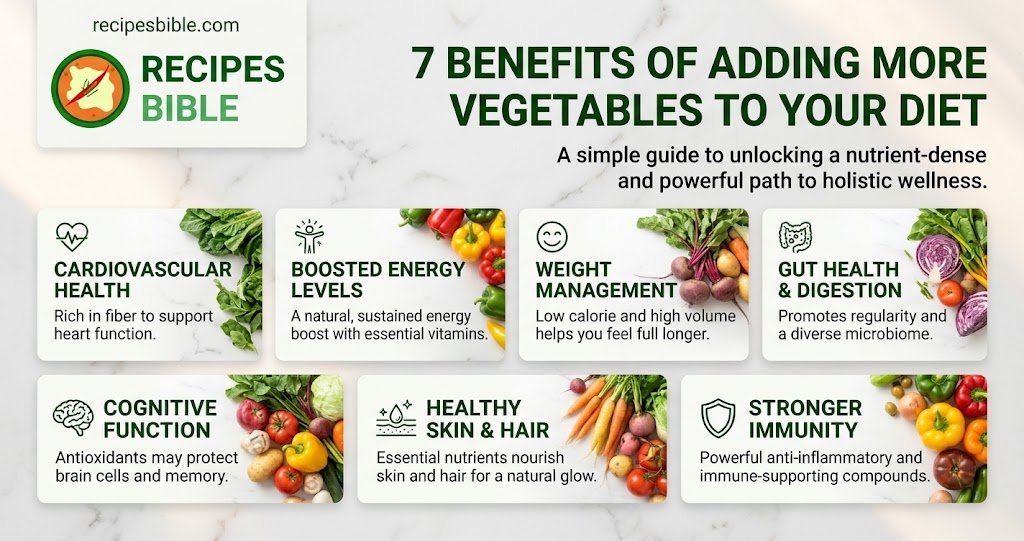
7 Benefits of Adding More Vegetables to Your Diet
Vegetables are an essential part of a balanced eating pattern. From leafy greens and crunchy carrots to broccoli, tomatoes, and colorful bell peppers, vegetables provide a wide range of vitamins, minerals, fiber, and beneficial plant compounds. Eating different types regularly can help you build nutritious meals while adding color, flavor, and texture to your plate.
You don't need to make dramatic changes to enjoy more vegetables. Adding spinach to breakfast, including a side salad at lunch, or mixing extra vegetables into dinner can make a meaningful difference to your overall eating habits. Here are seven reasons to make vegetables a regular part of your daily diet.
1. They Support Heart Health
Many vegetables provide potassium, fiber, and other nutrients that can contribute to cardiovascular health. Potassium helps regulate blood pressure, while a diet rich in vegetables can form part of an overall heart-friendly eating pattern.
Leafy greens, broccoli, tomatoes, and sweet potatoes are useful choices to include in a varied diet. Eating more vegetables alongside fruits, whole grains, legumes, and healthy fats can help support healthy lifestyle habits.
How to enjoy them: Add spinach to omelets, serve steamed broccoli with dinner, or prepare a colorful salad with tomatoes, cucumber, and leafy greens. Choose cooking methods that use moderate amounts of salt and added fats.
2. They Help Support Healthy Digestion
Many vegetables contain dietary fiber, which supports normal bowel function and helps maintain digestive regularity. Fiber also contributes to a healthy gut environment by providing nourishment for beneficial gut microbes.
Vegetables such as peas, carrots, broccoli, Brussels sprouts, and artichokes can help increase daily fiber intake. Different vegetables provide different types of fiber, so eating a variety is useful.
How to enjoy them: Add carrots and peas to soups, serve roasted Brussels sprouts with dinner, or include broccoli in a stir-fry. Increase fiber gradually and drink enough water, especially if you are adding more high-fiber foods to your diet.
3. They Provide Essential Vitamins and Minerals
Vegetables supply a range of nutrients that the body needs to function properly. For example, carrots and sweet potatoes contain beta-carotene, which the body can convert into vitamin A. Leafy greens can provide folate and vitamin K, while bell peppers and broccoli are sources of vitamin C.
These nutrients support normal functions such as vision, immune function, blood clotting, and tissue maintenance. Different vegetables contain different combinations, so variety matters more than relying on one particular food.
How to enjoy them: Combine orange carrots, red peppers, green spinach, and purple cabbage in your weekly meals. Fresh, frozen, and suitable canned vegetables can all be practical options.
4. They Can Help You Build Satisfying Meals
Vegetables often provide plenty of volume and fiber relative to their calorie content. Including them in meals can make your plate more substantial and may help you feel satisfied, especially when they are combined with protein-rich foods and whole grains.
Vegetables are not a replacement for all other food groups. Instead, they can complement foods such as beans, eggs, fish, tofu, rice, and whole-grain bread.
How to enjoy them: Fill part of your plate with roasted vegetables, add greens to a bean bowl, or mix mushrooms and peppers into whole-grain pasta. Include protein and healthy fats to create a balanced, satisfying meal.
5. They Provide Antioxidants and Beneficial Plant Compounds
Many vegetables contain antioxidants and other plant compounds that help protect cells from oxidative damage. Examples include carotenoids in carrots and tomatoes, and various polyphenols in leafy greens and other vegetables.
Different colors can offer clues to the variety of plant compounds present, although color alone does not tell the whole nutritional story. Eating a wide range of vegetables is a practical way to benefit from their diverse nutrients.
How to enjoy them: Try red tomatoes, orange carrots, purple cabbage, and dark-green spinach throughout the week. You can roast, steam, stir-fry, or eat suitable vegetables raw, depending on the variety and your preferences.
6. They Contribute to Healthy Skin and Overall Wellness
Vegetables provide nutrients that support normal skin and body functions. Vitamin C, found in vegetables such as bell peppers and broccoli, helps the body make collagen, a protein important for skin structure and wound healing. Carotenoids in orange and dark-green vegetables can contribute to vitamin A needs.
Healthy skin depends on many factors, including genetics, sun exposure, hydration, sleep, and overall nutrition. Vegetables can contribute valuable nutrients, but no single vegetable guarantees clear or glowing skin.
How to enjoy them: Add bell peppers to wraps, serve broccoli with your main meal, or make a colorful salad with leafy greens and tomatoes. Pair vegetables with other nutritious foods to support a balanced diet.
7. They Help You Establish Healthy Eating Habits
Keeping vegetables available and easy to prepare can help you make nutritious choices more often. Their versatility makes them suitable for breakfast, lunch, dinner, and snacks. Frozen vegetables can be especially useful when fresh produce is expensive, seasonal, or difficult to store.
Preparing vegetables ahead of time can also make cooking easier on busy days. Wash and cut suitable produce, store it safely, and use it in quick meals throughout the week.
How to enjoy them: Add spinach to eggs, keep chopped carrots ready for snacks, mix frozen vegetables into rice dishes, or prepare a large pot of vegetable soup. Start with one additional serving and gradually find routines that work for you.
Simple Tips for Eating More Vegetables
- Include at least one vegetable with meals when practical.
- Choose a range of colors and types throughout the week.
- Keep frozen vegetables available for quick meals.
- Add vegetables to soups, curries, pasta, sandwiches, and omelets.
- Experiment with herbs, spices, lemon juice, and roasting to improve flavor.
- Increase fiber-rich foods gradually if your current intake is low.
The amount and variety that suit you will depend on your age, appetite, health, and dietary needs. If certain vegetables cause digestive discomfort or you have specific dietary restrictions, choose options you tolerate well and seek professional advice when needed.
Adding more vegetables to your diet is a practical way to increase your intake of fiber, vitamins, minerals, and beneficial plant compounds. They can support digestion, contribute to heart health, and help make meals more colorful and satisfying.
Start with small changes, such as adding spinach to breakfast or serving broccoli with dinner. Over time, a variety of vegetables can become a natural part of your routine. For more healthy food ideas and everyday recipe inspiration, visit RecipesBible.
Related Blogs

The Story of Noodles: Origin, Evolution, and Why They Became Popular Worldwide
The Story of Noodles: Origin, Evolution, and Why They Became Popular Worldwide
Noodles are one of the most loved foo
2026-06-17 SEE MORE
7 Healthy Sources of Plant-Based Protein
Plant-based protein is an important part of a balanced diet. Whether you follow a vegetarian or vegan lifestyle or simply wa
2026-10-24 SEE MORE
10 Most Popular Indian Vegan Dishes You Must Try
Indian cuisine is a paradise for vegan food lovers. With its rich use of spices, lentils, vegetables, and plant-based cooking techniques,
2026-03-31 SEE MORE
Rajasthani Salads: Traditional Healthy & Refreshing Salad Recipes from Rajasthan
When people think of Rajasthani cuisine, rich dishes like dal baati churma, gatte ki sabzi, and laal maas often come to mind. However, al
2026-04-10 SEE MORE