The Story of Noodles: Origin, Evolution, and Why They Became Popular Worldwide
The Story of Noodles: Origin, Evolution, and Why They Became Popular Worldwide
Noodles are one of the most loved foods in the world. From street food stalls to luxury restaurants, noodles have become a part of many cultures and cuisines. They are enjoyed in different forms, flavors, and styles across continents. Whether it is spicy Asian noodles, Italian pasta, or instant noodles, this simple food has captured the hearts of millions. But where did noodles come from, and why did they become so popular among common people?
The Origin of Noodles
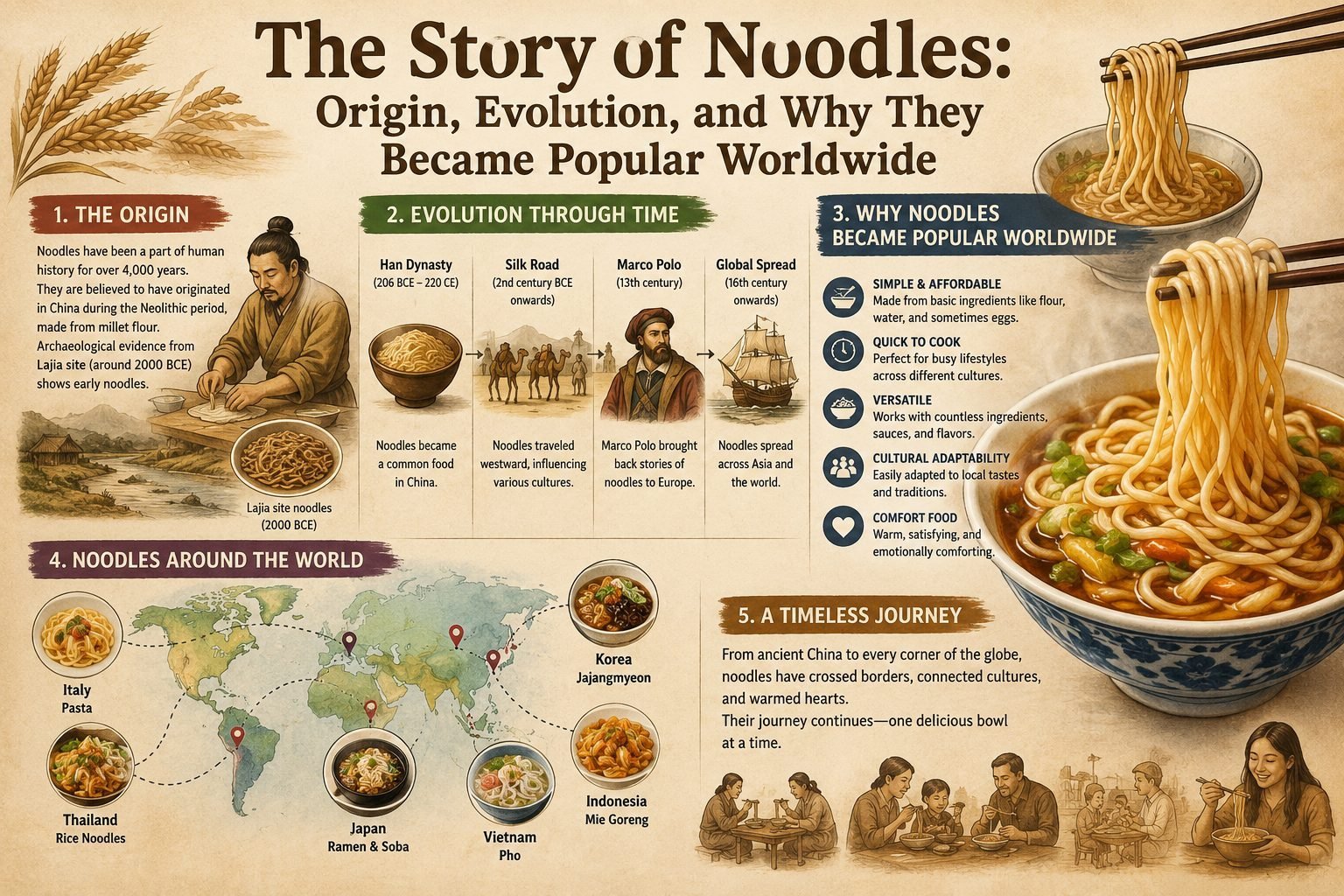
The history of noodles goes back thousands of years. Many historians believe that noodles originated in China. The earliest evidence of noodles was discovered in China, where archaeologists found a 4,000-year-old bowl of noodles made from millet grains. This discovery proved that noodles have been a part of human food culture for a very long time.
Ancient Chinese people created noodles as a practical and filling meal. They used simple ingredients like flour, water, and grains to prepare long strands of dough. Noodles were easy to cook, easy to store, and provided enough energy for daily activities.
Over time, noodle-making techniques improved, and different regions of China developed their own styles. Some noodles were thin and soft, while others were thick and chewy. People started adding vegetables, meat, spices, and sauces to make noodles more flavorful.
The Spread of Noodles Around the World
Noodles did not remain limited to China. Through trade routes like the Silk Road, noodle-making techniques spread to other countries. Different cultures adapted noodles according to their local ingredients and tastes.
In Japan, noodles became an important part of food culture. Japanese varieties like ramen, udon, and soba became famous. Each type developed its own unique texture and flavor.
In Southeast Asian countries like Thailand, Vietnam, and Indonesia, noodles became a major part of traditional cuisine. Dishes like Pad Thai, Pho, and Mie Goreng became internationally popular.
Some historians also connect noodles with the development of pasta in Italy. Although pasta and noodles developed differently, both are examples of how humans used grains and water to create affordable and satisfying meals.
Why Did Noodles Become So Popular Among Common People?
One of the biggest reasons noodles became popular is their simplicity. Noodles require only a few basic ingredients: flour, water, and sometimes eggs. These ingredients were easily available and affordable for ordinary people.
Noodles are also quick to prepare. Unlike many traditional meals that require long cooking times, noodles can be cooked within minutes. This made them perfect for busy families, workers, students, and travelers.
Another reason for their popularity is flexibility. Noodles can be prepared in countless ways. People can add vegetables, chicken, seafood, sauces, spices, or even make them sweet or spicy. Every country has created its own version of noodles according to local taste preferences.
For example:
- Chinese noodles often focus on stir-frying, sauces, and fresh ingredients.
- Japanese ramen combines noodles with flavorful broth and toppings.
- Thai noodles use bold flavors like chili, peanuts, and herbs.
- Indian-style noodles often include spicy masalas and vegetables.
This ability to adapt helped noodles become a global favorite.
The Rise of Instant Noodles
A major turning point in noodle history came with the invention of instant noodles. In 1958, Japanese inventor Momofuku Ando introduced the first instant ramen. His idea was to create a food that was affordable, easy to cook, and available to everyone.
Instant noodles became extremely popular because they solved a common problem: people needed quick and inexpensive meals. Students, office workers, travelers, and families started choosing instant noodles because they could prepare a meal in just a few minutes.
Today, instant noodles are sold worldwide in thousands of flavors. They have become a symbol of convenience and modern lifestyle.
Noodles and Modern Food Culture
Today, noodles are more than just a meal. They represent culture, creativity, and comfort. Many people have childhood memories connected with noodles. They are often considered a comfort food because they are warm, tasty, and satisfying.
Restaurants and chefs continue to experiment with noodles by creating new recipes. From creamy noodles to spicy Korean-style ramen, new variations appear every year.
Social media has also increased the popularity of noodles. Food bloggers, chefs, and influencers share unique noodle recipes, making them even more famous among younger generations.
Conclusion
Noodles have a long and fascinating history that began thousands of years ago. Starting as a simple food in ancient China, noodles traveled across the world and became a part of many cultures. Their affordable ingredients, quick preparation, and endless variety made them popular among ordinary people.
The journey of noodles shows how a simple dish can connect people from different countries and backgrounds. Whether enjoyed at a street stall, a home kitchen, or a restaurant, noodles remain one of the world's most loved foods.
Related Blogs

Famous Desserts of Pakistan: A Sweet Journey Through Tradition
Pakistan is widely known for its rich culinary heritage, filled with flavorful dishes and aromatic spices. However, one aspect of Pakista
2026-04-22 SEE MORE
15 Easy Dinner Recipes for Busy Weeknights | Quick Family Meals
Introduction
Are you struggling to find time to prepare dinner after a long, exhausting day at work? You're not alone. Many
2026-06-07 SEE MORE
Why Ricotta Cheesecake is Better Than Your Regular Cheesecake
When it comes to indulgent desserts, cheesecake has always been a timeless favorite. From classic New York cheesecake to fru
2026-05-29 SEE MORE
Teriyaki Chicken and Tamago Sando: A Japanese Convenience Store Favorite You Can Make at Home
Teriyaki Chicken and Tamago Sando: A Japanese Convenience Store Favorite You Can Make at Home
If you've ever wandered into a Japane
2026-04-20 SEE MORE